The SoHo Loft Discount Just Got a Price Tag
August 13, 2026
August 13, 2026
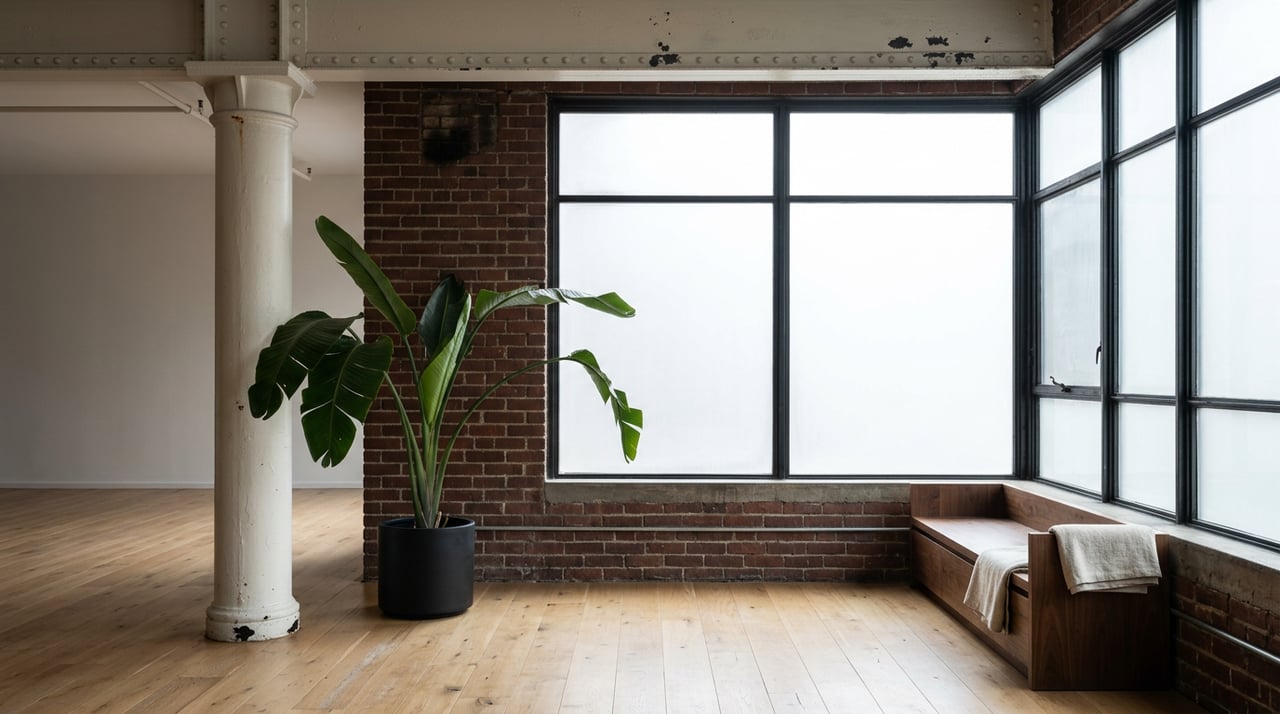
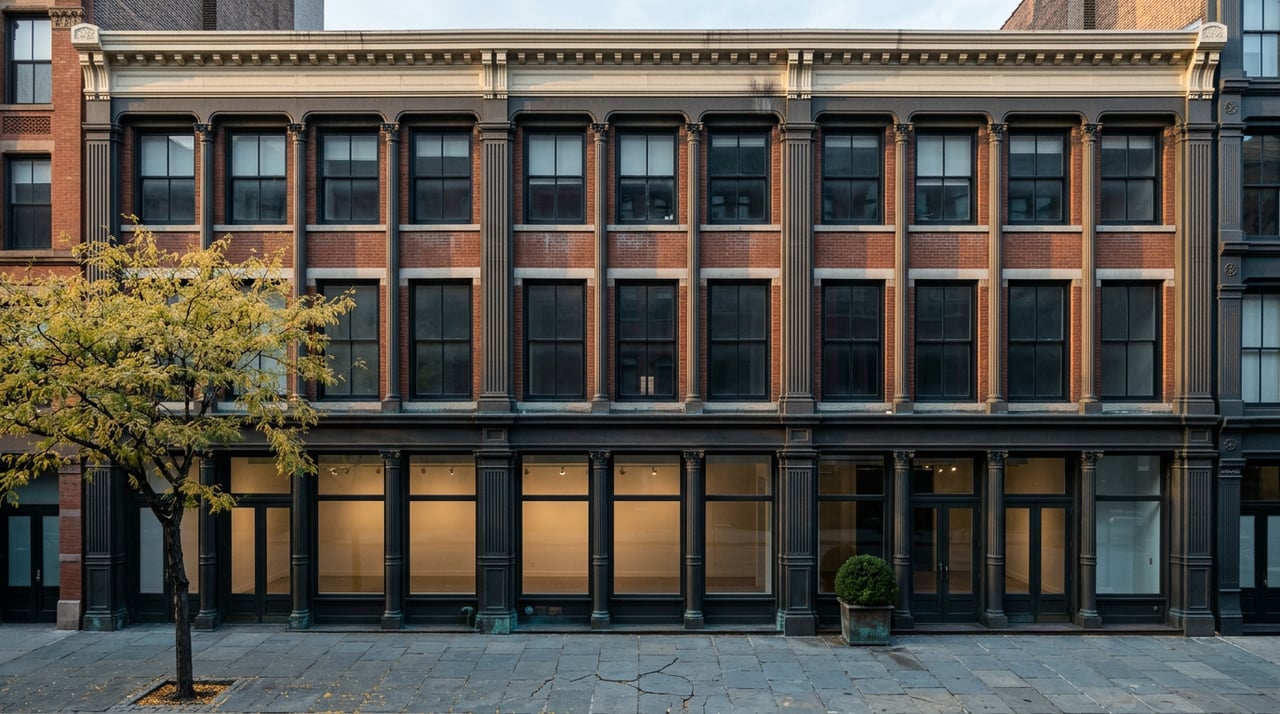
For two and a half years, a loft at 158 Mercer Street sat on the market. The space had the pedigree buyers say they want in SoHo: cast-iron bones, soaring ceilings, a rock star's former address. What kept buyers walking away wasn't the apartment. It was the certificate of occupancy, which listed the unit as Joint Living-Work Quarters for Artists, a designation lenders knew.
That kind of hesitation has shaped SoHo pricing for decades in a way that never showed up as a clean line item. Buyers discounted for risk they couldn't quantify. Lenders demanded bigger down payments for uncertainty they couldn't underwrite. Everyone agreed the artist-loft designation was a problem. Nobody could say exactly how much of one.
As of January 13, 2026, The Real Deal reported that the New York Court of Appeals ruled the conversion fee constitutional and enforceable. The New York City Department of Buildings lists the fee required to convert a JLWQA unit to unrestricted residential use at $100 per square foot. That single number changes how a SoHo loft buyer should read a listing sheet, and it's worth walking through why.
The case, Matter of the Coalition for Fairness in Soho and Noho, Inc. v. City of New York, traced back to the SoHo/NoHo rezoning. That plan addressed the artist-certification requirement for JLWQA unit owners. The fee was set at $100 per square foot of converted floor area, adjusted annually for inflation.
A coalition of loft owners sued, arguing the fee was an unconstitutional taking under the Fifth Amendment. Pacific Legal Foundation reported that New York's Appellate Division agreed with them in a unanimous ruling, which meant that for a while, the fee looked dead. Then the City appealed to the Court of Appeals, New York's highest court, and won in a 6-1 decision. Writing for the majority, Judge Jenny Rivera held that the rezoning "does not alter the zoning of plaintiffs' property or diminish their rights in any way." Owners are simply being offered the option to trade one type of property interest for another, in exchange for money, and that exchange isn't a taking.
Judge Michael Garcia dissented, arguing the fee is exactly the kind of monetary exaction the Supreme Court's Nollan, Dolan, and Koontz line of cases was designed to police. Pacific Legal Foundation, representing the coalition, filed a petition asking the U.S. Supreme Court to take the case. As of this writing, the justices haven't said whether they will.
For a buyer evaluating a loft today, the practical result is this: the fee stands, it's collectible, and it has a fixed formula. The years of not knowing what the artist-loft problem would ultimately cost are over, at least for now.
Roughly 30 percent of homes in SoHo and NoHo are still listed as JLWQA on their certificate of occupancy, according to a recent city planning review. That's not a rounding error in the housing stock. It's a real share of the buildings a buyer will tour this fall.
Run the fee against actual loft sizes and the number stops being abstract. Pacific Legal Foundation put the average cost at roughly $250,000 per unit, and the math checks out: amNewYork reports that SoHo lofts frequently exceed 2,500 square feet, so at $100 per square foot, a loft that size clears a quarter million dollars just to convert. A smaller 2,000-square-foot unit still runs $200,000.
| JLWQA unit (unconverted) | Fully residential unit | |
|---|---|---|
| Buyer pool | Limited by the JLWQA designation | Anyone |
| Typical down payment | 25 to 30 percent or more | Standard conventional terms |
| Cost to remove restriction | $100/sq ft one-time Arts Fund fee, indexed annually | N/A |
| Legal status as of Aug. 2026 | Fee upheld by Court of Appeals; SCOTUS review pending | Not applicable |
Weigh that against where SoHo prices sit. PropertyShark placed the neighborhood's median price per square foot at roughly $1,600 as of February 2026, and other market trackers around the same period put listing prices closer to $2,100 per square foot depending on how the sample is drawn. Either way, a $100-per-square-foot fee isn't trivial. On the lower end of that range it represents something like six percent of value. That's a real number to model, not a footnote.
The uncertainty around JLWQA status has shown up in financing long before this ruling. Buyers of units without a standard residential certificate of occupancy have typically needed to put down 25 to 30 percent or more, well above what a conventional condo purchase requires elsewhere in Manhattan. National banks have often avoided these buildings outright, leaving portfolio lenders and credit unions with SoHo-specific experience to fill the gap.
That financing friction was always a proxy for the same unresolved question the courts just answered: if this unit ever needs to be sold to someone who isn't a certified artist, what does that cost, and is it even legally possible? A lender who can't answer that question charges for the unknown. A lender who can now point to a fixed, court-tested fee schedule has a different conversation to have with underwriting.
The Real Deal's coverage of the ruling on January 14 noted that the whole point of the arrangement was to give owners a legal path forward, not just a workaround. That distinction matters for financing. A workaround is a risk. A legal path with a stated price is a cost, and costs get underwritten, not just discounted for.
None of this means every JLWQA resident needs to write a check tomorrow. New York's Multiple Dwelling Law was amended in 2022 to let non-artists who were already living in JLWQA units before the rezoning stay put legally, without conversion. The fee becomes relevant when an owner wants full residential status to simplify financing, insurance, or resale.
That's cold comfort to longtime residents facing a transfer. For a family passing down a unit rather than selling it on the open market, $100 a square foot isn't a pricing input; it may be a barrier to a home staying in the family.
For a buyer, though, the fee is exactly a pricing input, and that's the shift worth sitting with. Before January, a wide gap between a JLWQA loft and a comparable converted unit next door could be explained by genuine legal risk, the kind that might resolve for free if the fee got struck down, or might balloon if the city found new ways to enforce artist certification. The Court of Appeals closed off the first possibility. The fee is real, it's collectible, and it's the same $100 a square foot whether you're buying this month or next year, aside from the annual inflation adjustment.
That means the size of the discount now has a ceiling that makes sense. A JLWQA loft priced meaningfully more than $100 a square foot below an equivalent converted unit is arguably underpriced relative to what it would actually cost to fix. A loft priced right around that gap is pricing the fee correctly. Anything closer than that is pricing in an assumption that the Supreme Court will step in, which is a bet, not a fact.
Does this affect every SoHo or NoHo loft? No. It applies specifically to units still designated JLWQA on their certificate of occupancy, which is roughly 30 percent of homes in the two neighborhoods. Units that have already converted, or that fall under Loft Law as interim multiple dwellings, are handled differently.
If I buy a JLWQA unit, do I have to pay the fee right away? Not automatically. The fee applies when an owner chooses to convert the unit to unrestricted residential use, which is typically driven by financing needs, resale plans. Buyers should confirm a unit's exact status through the certificate of occupancy and NYC Department of Buildings records before assuming either way.
Is this fee guaranteed to stay in place? It's enforceable now, following the January 2026 Court of Appeals decision, but Pacific Legal Foundation has asked the U.S. Supreme Court to review the case. The justices have discretion over whether to take it up, and there's no timeline guaranteeing an answer soon.
A JLWQA designation isn't a reason to avoid a SoHo loft. It's a reason to ask sharper questions before making an offer, and to have someone in the room who already knows which questions those are. If you're comparing a loft's price per square foot against what it would actually take to clear its legal status, The Saez + Fromm Team can walk through the certificate of occupancy, the financing implications, and the real math before you write a contract. Request a Private Consultation to start that conversation.
This article is general information, not legal, tax or financial advice. Consult a qualified professional about your situation.
Stay up to date on the latest real estate trends.
October 15, 2026
October 8, 2026
October 1, 2026
September 24, 2026
September 17, 2026
September 10, 2026
September 3, 2026
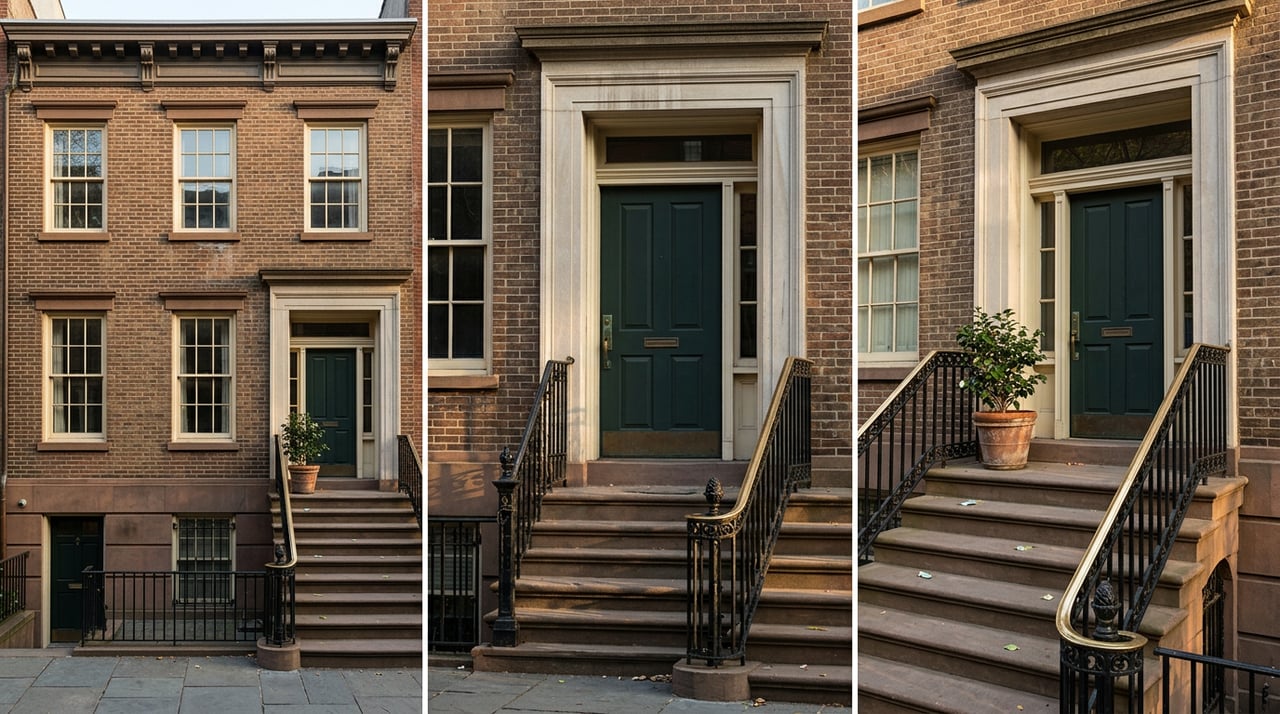
August 27, 2026
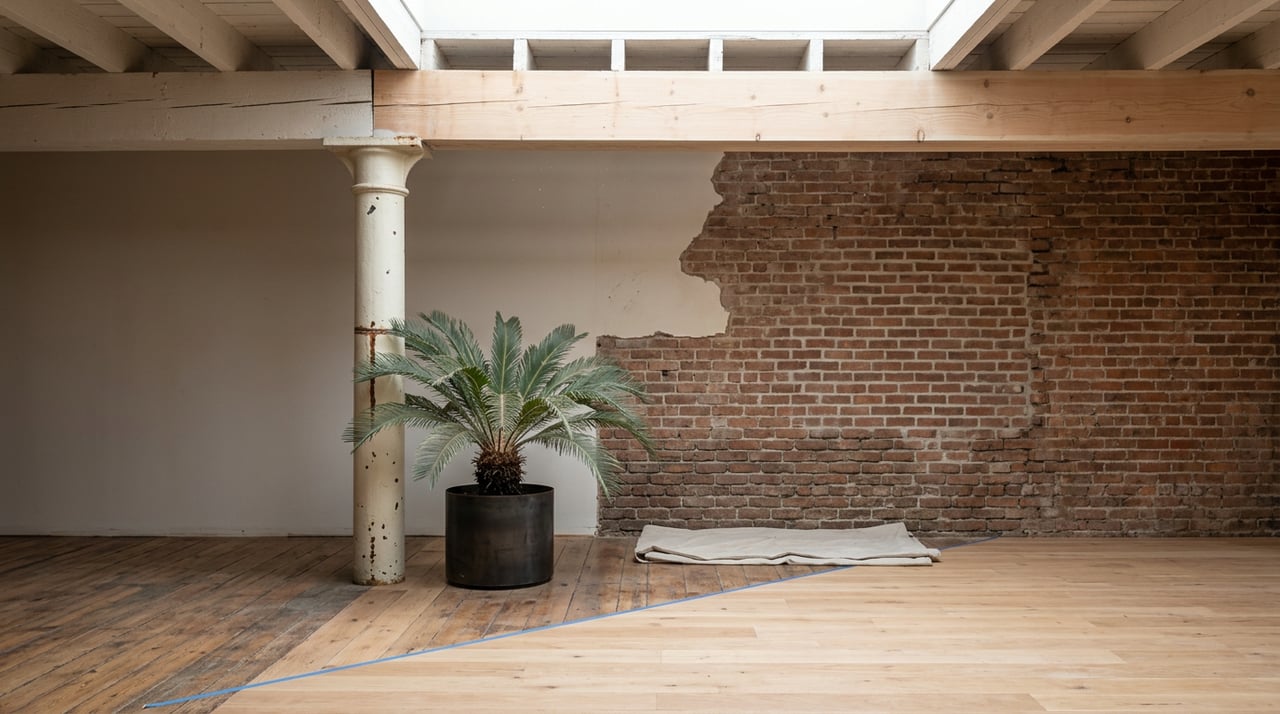
August 20, 2026
As a top team at Douglas Elliman, SAEZFROMM continues to deliver the greatest value to our buyers, sellers, developers, and investors. Our focus is on one thing above all others: our clients, their needs, and what makes them happy.
SAEZFROMM
M: (212) 203-1798
O: (212) 891-7181
[email protected]
Douglas Elliman Real Estate
140 Franklin St
New York NY 10013