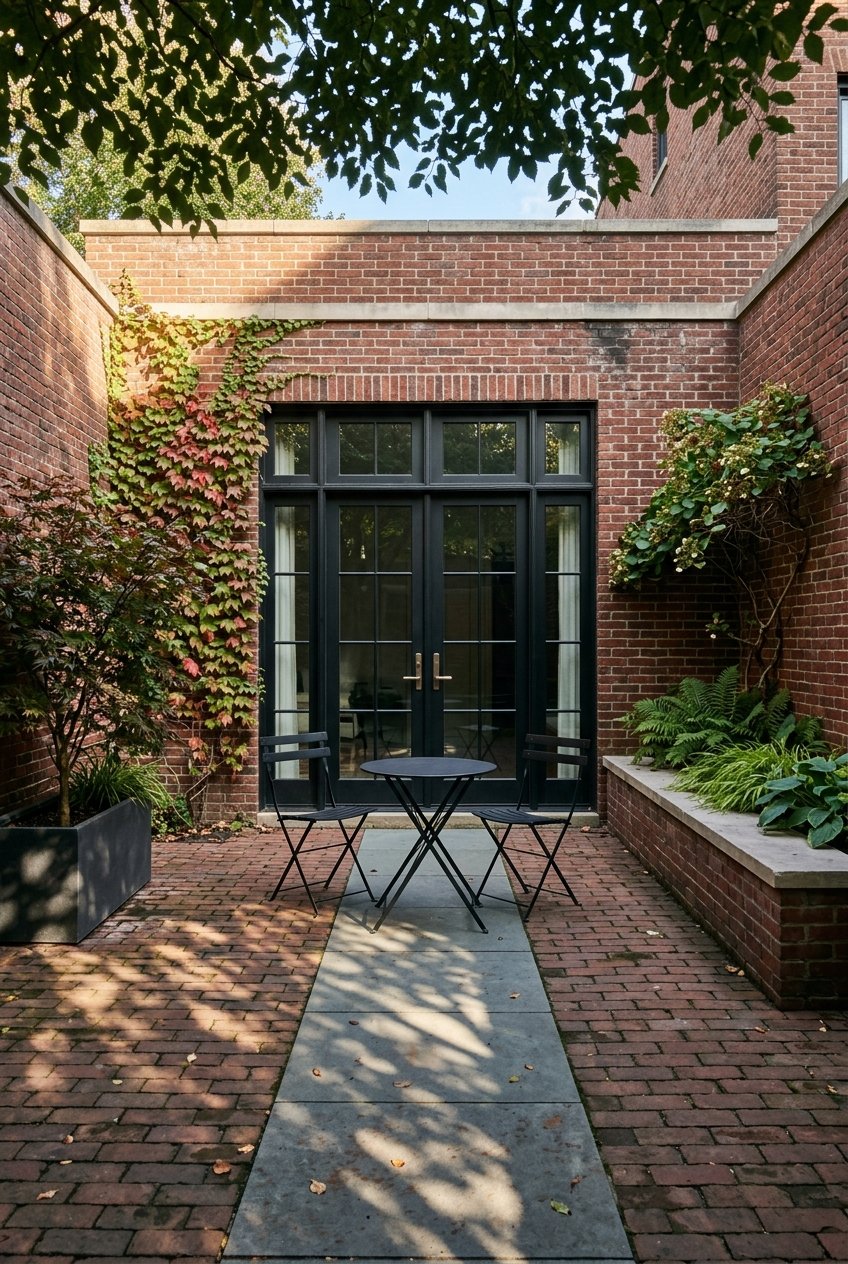
Greenwich Village Townhouse Lifestyle Through Hidden Gardens
July 2, 2026
July 2, 2026
Ever walked a Greenwich Village block and felt like the real magic might be hiding just beyond the street line? That instinct is often right. In a neighborhood known for its layered history and intimate scale, some of the most memorable spaces sit behind gates, down narrow passages, and within quiet interior courts. If you love the Village for its beauty, texture, and sense of discovery, these secret gardens and courtyards help explain why the neighborhood feels so distinct. Let’s take a closer look.
Greenwich Village did not get its secret garden character by accident. Its older street pattern, deep lots, and long-standing landmark protections helped preserve the low-rise fabric where rear yards, mews, and small courts could survive rather than be replaced.
The Greenwich Village Historic District was designated in 1969, with later extensions in 2006 and 2010. That preservation framework helped keep in place many of the conditions that make tucked-away outdoor spaces possible today, including interior gardens, former service courts, and small residential enclaves.
In many cases, these spaces began with practical uses. Horse stables, carriage courts, rear gardens, and leftover parcels created by the Village’s irregular geometry later evolved into places that now define the neighborhood’s quieter side.
One of the Village’s most appealing qualities is that not everything announces itself from the sidewalk. Some of its most charming spaces are experienced through gates, along narrow paths, or within interior blocks rather than on broad avenues.
That pattern creates a sense of discovery. In design terms, many of the neighborhood’s greenest and most memorable addresses have modest street presence, while the real surprise sits behind a gate, beside a townhouse row, or across a shared interior garden.
Among the clearest examples is Washington Mews. Originally a service street, it is known for two-story houses, a cobbled street, and a sense of enclosure reinforced by its gated western end.
Historic descriptions emphasize its unusual light, air, and isolation from traffic. That combination helps explain why it feels so different from the faster rhythm of the surrounding streets.
Washington Mews also shows how former utility spaces can become defining neighborhood features. What began as a functional zone now reads as one of the Village’s most intimate residential settings.
MacDougal Alley offers a similar story with a slightly different character. It began as a private court serving the townhouses of Washington Square North and West 8th Street, and many of its buildings were later converted to studios and residences.
Its appeal comes from scale and separation. Like other mews-style spaces in Greenwich Village, it feels inward-looking and protected from the traffic and noise found just a short distance away.
For buyers who are drawn to unusual property types, places like this highlight an important Village theme. Some of the neighborhood’s most compelling homes are tied to adaptive reuse and unconventional layouts rather than standard apartment formats.
Patchin Place and Milligan Place are among the Village’s best-known secluded hideaways. Built in the mid-19th century as modest workmen’s cottages, they remain notable for their tucked-away feel and narrow, inward-facing scale.
These small enclaves show that charm here is not always about size. Often, it comes from short blocks, narrow fronts, and the way a place turns inward from the city around it.
That distinction matters when you evaluate Greenwich Village real estate. A home’s value may come as much from atmosphere and setting as from square footage alone.
Grove Court is another standout example. It filled a rear-yard gap behind street houses with tiny cottages entered through a private gate and triangular courtyard.
That arrangement captures the Village at its most intimate. The architecture and access pattern create a feeling of retreat, even though the location remains firmly in the middle of Manhattan.
Spaces like Grove Court help explain why Greenwich Village can feel so layered. What appears to be a typical streetscape can hold a second, much quieter world just behind it.
If you want the purest example of a courtyard-garden model in Greenwich Village, MacDougal-Sullivan Gardens stands apart. The 1967 landmark designation report describes 22 houses facing Sullivan and MacDougal Streets that share a common garden.
The same report calls the inner garden an oasis in the heart of Manhattan. It also notes that William Sloane Coffin’s communal garden idea was considered revolutionary.
This kind of shared open space remains especially meaningful in Manhattan living. It offers a rare combination of architectural continuity, private residential character, and a strong connection to landscape.
Not every Greenwich Village garden is private. Some of the neighborhood’s most beloved green spaces are open to the public while still feeling tucked away.
Jefferson Market Garden sits on the triangular former market and prison block bounded by Greenwich Avenue, West 10th Street, and Sixth Avenue. According to the garden organization, it has been open to all since the first flowers bloomed there in 1975.
LaGuardia Corner Garden began in 1974 on a vacant lot at LaGuardia Place and West 3rd Street. It was later rebuilt through neighborhood organizing and GreenThumb involvement, showing how stewardship and community effort continue to shape the Village landscape.
Some semi-public gardens in the Village operate through NYC Parks GreenThumb. Under the GreenThumb handbook, registered gardens must remain open and accessible to the public for at least 20 hours per week during the April 1 to October 31 season, with posted hours and a public membership process.
That detail matters because it shapes how you experience these spaces. A garden may feel hidden or intimate, but in many cases it functions more like a small civic landscape than a private backyard.
For residents, that creates a unique middle ground. You get the texture and quiet of a neighborhood garden, with a stewardship model that also invites public access.
Across these mews, courts, and gardens, one theme shows up again and again: atmosphere. Preservation descriptions consistently emphasize light, air, peace, beauty, tree-lined surroundings, and enclosure from traffic.
That does not mean every block feels the same. It does mean these physical features help create a slower, more intimate residential rhythm than you might expect only a few blocks from major avenues.
For many buyers, that is the heart of Greenwich Village’s appeal. You are not just choosing a location. You are choosing a very specific way the neighborhood feels day to day.
If you are searching for a home in Greenwich Village, these hidden spaces can help you refine what you value most. They also offer clues about the kinds of properties that often feel especially special in this part of downtown Manhattan.
Look closely at settings such as:
In Greenwich Village, the setting around a home often shapes the experience as much as the home itself. A discreet gate, a cobbled lane, or an interior garden can completely change the feeling of arrival.
For sellers, these spaces offer a reminder that context matters. In Greenwich Village, buyers often respond to details that tell a richer story about privacy, layout, landscape, and the relationship between a residence and its surroundings.
A property near a mews, court, or shared garden may benefit from thoughtful positioning that highlights that sense of place clearly and accurately. The strongest marketing does not exaggerate. It helps buyers understand why a home feels rare within the broader Manhattan market.
The secret gardens and courtyards of Greenwich Village are more than pretty side notes. They are part of the neighborhood’s structure, history, and identity.
They show how preservation, adaptive reuse, and community stewardship can shape a residential environment that still feels layered and human in the middle of New York City. That is a major reason Greenwich Village continues to hold such lasting appeal for discerning buyers and sellers alike.
If you are considering a purchase or sale in Greenwich Village, understanding these subtle setting details can make all the difference. For tailored guidance on townhouse, condominium, and luxury Village opportunities, connect with the SAEZFROMM Team.
Stay up to date on the latest real estate trends.
October 15, 2026
October 8, 2026
October 1, 2026
September 24, 2026
September 17, 2026
September 10, 2026
September 3, 2026
August 27, 2026
August 20, 2026
As a top team at Douglas Elliman, SAEZFROMM continues to deliver the greatest value to our buyers, sellers, developers, and investors. Our focus is on one thing above all others: our clients, their needs, and what makes them happy.
SAEZFROMM
M: (212) 203-1798
O: (212) 891-7181
[email protected]
Douglas Elliman Real Estate
140 Franklin St
New York NY 10013