What International Buyers Should Know About SoHo Condos
June 18, 2026
June 18, 2026
Thinking about buying a SoHo condo from abroad? You are not alone, and you are right to look closely before making a move in one of Manhattan’s most recognized luxury markets. SoHo offers a rare mix of cast-iron architecture, downtown energy, and globally familiar appeal, but buying here also comes with building-level rules, landmark considerations, and New York-specific closing costs that deserve careful review. This guide will help you understand what matters most so you can move forward with more clarity and confidence. Let’s dive in.
SoHo stands out because it offers a very specific version of Manhattan living. The neighborhood is known for former textile-factory buildings, open loft-style layouts, dense retail, and luxury pricing. StreetEasy places SoHo among Manhattan’s most expensive neighborhoods, with a median sale price of $3.4 million and median days on market of 54.
For many international buyers, that mix is the appeal. You are not just buying square footage. You are buying into a downtown setting with architectural character, low turnover, and a property type that often works well as a pied-à-terre, long-term city base, or investment-oriented hold.
Buyer patterns support that fit. According to the 2024 international-transactions data cited in the research, 45% of foreign buyers purchased for vacation use, rental use, or both, and 50% paid all cash. Among nonresident foreign buyers, 68% paid all cash, which helps explain why SoHo remains a natural match for buyers seeking flexibility in a central urban market.
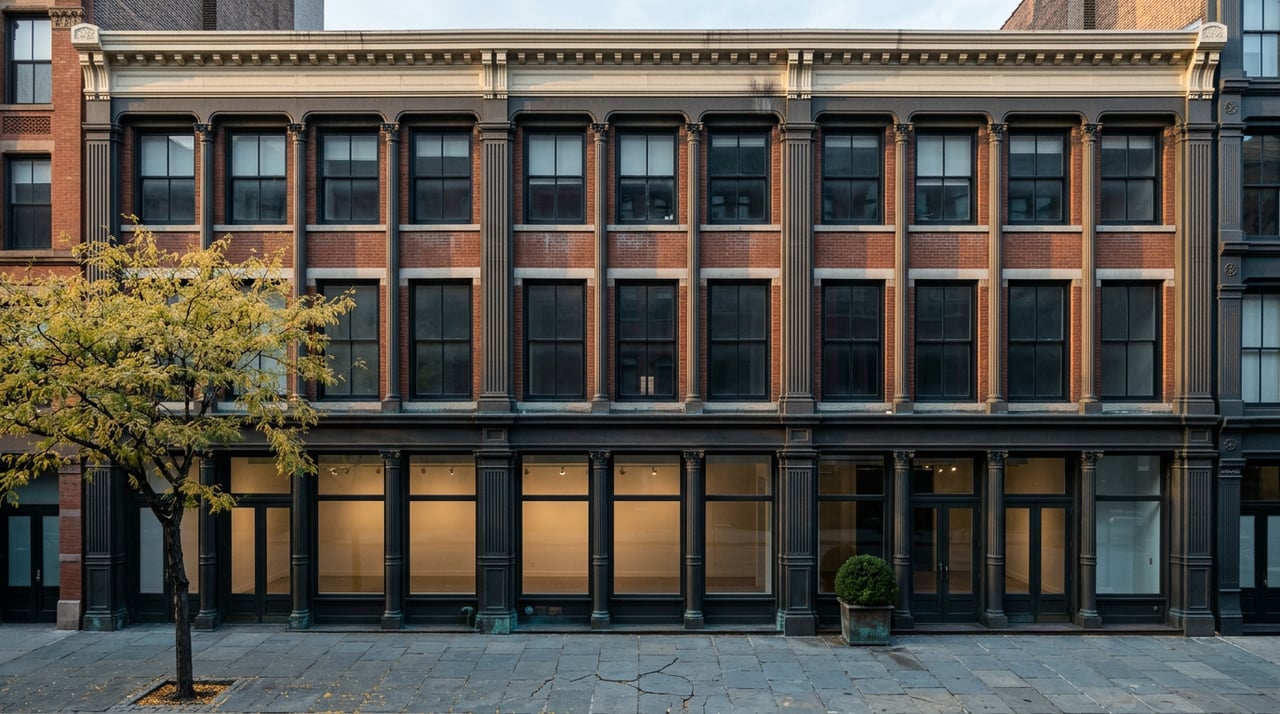
SoHo’s identity is protected, not incidental. The SoHo-Cast Iron Historic District designation covers about 500 buildings across 25 city blocks, preserving the area’s early industrial character while supporting its role as a major residential and shopping destination.
That matters because a SoHo condo purchase is often tied to a building with real architectural constraints. If you are buying in a landmarked building, exterior work and visible alterations may require review and approval under Landmarks Preservation Commission rules. In practice, this can affect timelines for window changes, facade work, and other exterior modifications.
For an international buyer, this means the building’s visual character is often part of its value proposition, but it can also limit how quickly certain changes happen. If your plan includes upgrades or changes, you will want to understand early what is building-controlled, what is owner-controlled, and what may require city review.
In New York, condo due diligence starts with documents. The New York State Attorney General advises buyers to read the entire offering plan and consult an attorney before signing. That guidance is especially important if you are purchasing from abroad and may be less familiar with New York condo practice.
The offering plan is where key promises live. Amenities, recreational facilities, and unit features are binding only if they are specifically promised in that plan. If something influenced your decision, whether that is storage, finishes, services, or shared spaces, it should be confirmed in the documents rather than assumed from marketing materials or verbal discussions.
In existing buildings, document review should also go further. The same New York guidance recommends reviewing board minutes, financial reports, and violation records. This can help you identify possible exposure to major building repairs involving the facade, roof, elevator, plumbing, electrical systems, or boiler.
In SoHo, beautiful design does not replace building fundamentals. A polished lobby or well-staged unit may create a strong first impression, but the long-term ownership experience often depends on management quality, reserve planning, and the physical condition of the property.
That is especially true in older loft buildings, where character can come with more maintenance complexity. If you are comparing options, it helps to look beyond aesthetics and ask how the building is run, what work has been completed, and whether larger capital projects may be coming.
For international buyers who may not be in New York full time, strong building management can be a major practical advantage. Clear communication, dependable operations, and a well-organized managing agent can make ownership much easier from a distance.
Many international buyers purchase with cash, and the data backs that up. Foreign buyers made all-cash purchases 50% of the time in the research cited here, compared with 28% among all existing-home buyers. For nonresident foreign buyers, the all-cash share was 68%.
That said, financing is not off the table. The research notes that some international-borrower programs do not require U.S. credit history and may rely instead on identity, income, and asset documentation. It also notes that purchase funds must be in a U.S. bank account even if foreign assets help satisfy loan requirements.
The practical takeaway is simple. If you plan to finance, begin document preparation early. Identity records, proof of income, asset verification, and fund transfers can all affect timing.
There is no single fixed closing timeline that fits every SoHo condo purchase. In New York, the contract should identify the proposed closing date, and the actual timing depends on the specifics of the deal.
For international buyers, closing often requires more coordination than a standard domestic purchase. Financing, document collection, translation needs, fund movement, and title or closing logistics can all shape the path to the finish line.
If you are buying from abroad, a well-structured timeline matters. You will want enough lead time for legal review, banking logistics, and any building-related approvals or document requests that arise during due diligence.
The purchase price is only part of the ownership picture. In SoHo, carrying costs can be substantial, so it is important to budget carefully before you commit.
NYC classifies condos and similar residential properties under Class 2 property-tax rules, and property-tax bills are issued quarterly or semiannually. If you finance, you should also budget for mortgage recording tax.
Transfer taxes deserve special attention. The research notes that the base real-property transfer tax is usually paid by the seller, but the mansion tax is paid by the buyer and applies at $1 million and above. NYC’s supplemental tax can also apply on residential conveyances at $2 million and above.
Because SoHo’s median sale price is $3.4 million, many purchases in the neighborhood will cross those thresholds. For international buyers comparing Manhattan neighborhoods, this is one of the clearest reasons to model total acquisition costs, not just headline pricing.
Some New York condos qualify for the co-op and condo tax abatement, but you should not assume that benefit will apply to your purchase. The program is administered through the board or managing agent, which collects primary-residency information and handles renewals.
That primary-residency requirement is important. If you are buying a pied-à-terre or part-time residence, the abatement may not apply. For many international buyers, this makes the benefit less relevant than it may appear at first glance.
A careful review of building administration and your expected use of the property can help you avoid incorrect assumptions in your budget. In a market like SoHo, even a small misunderstanding can affect the real cost of ownership.
Sophisticated buyers often think beyond acquisition, and that is smart in Manhattan. If you are a foreign owner, your future sale may involve FIRPTA withholding, and certain buyers who are not eligible for a Social Security number may need an ITIN to file U.S. tax forms.
The research also notes that some nonresidents with U.S. assets must file estate-tax returns. That does not mean every buyer will face the same outcome, but it does mean tax planning should not wait until resale.
Before you purchase, it is wise to think about how you may eventually hold, use, and transfer the property. That kind of planning can support a smoother ownership experience from day one.
International buyers often compare SoHo with Tribeca, West Village, Flatiron, and the Upper East Side. Each offers a different version of Manhattan luxury, and the differences are useful when refining your search.
Tribeca is SoHo’s closest comparison in pricing and architectural feel. StreetEasy reports a median sale price of $3.5 million in Tribeca, slightly above SoHo’s $3.4 million, and notes a similar presence of renovated industrial loft buildings.
West Village presents a different experience. Its median sale price is $1.5 million, and the housing stock is described as more historic townhouse and walk-up oriented, with a less loft-centric feel.
Flatiron, at a median sale price of $1.7 million, blends converted lofts with newer luxury development. The Upper East Side, at $1.2 million, is the more traditional uptown luxury benchmark, with a calmer high-rise environment.
SoHo’s edge is its combination of landmarked cast-iron architecture, strong retail presence, and downtown identity. If you value character, walkability, and a design-forward setting over a more conventional tower experience, SoHo often earns a place at the top of the list.
If you are evaluating a SoHo condo from abroad, your short list should go beyond price and photos. The strongest purchases are usually the result of disciplined due diligence and a clear understanding of how you plan to use the property.
Focus on these points early:
In a market as nuanced as SoHo, details matter. A condo that feels perfect on first visit may look very different after document review, while a quieter opportunity may prove stronger once the numbers and building profile come into focus.
If you are considering a SoHo purchase and want a more tailored strategy, the SAEZFROMM Team can help you evaluate inventory, compare downtown options, and navigate the process with discretion and care.
Stay up to date on the latest real estate trends.
October 15, 2026
October 8, 2026
October 1, 2026

September 24, 2026
September 17, 2026
September 10, 2026

September 3, 2026
August 27, 2026

August 20, 2026
As a top team at Douglas Elliman, SAEZFROMM continues to deliver the greatest value to our buyers, sellers, developers, and investors. Our focus is on one thing above all others: our clients, their needs, and what makes them happy.

SAEZFROMM
M: (212) 203-1798
O: (212) 891-7181
[email protected]
Douglas Elliman Real Estate
140 Franklin St
New York NY 10013