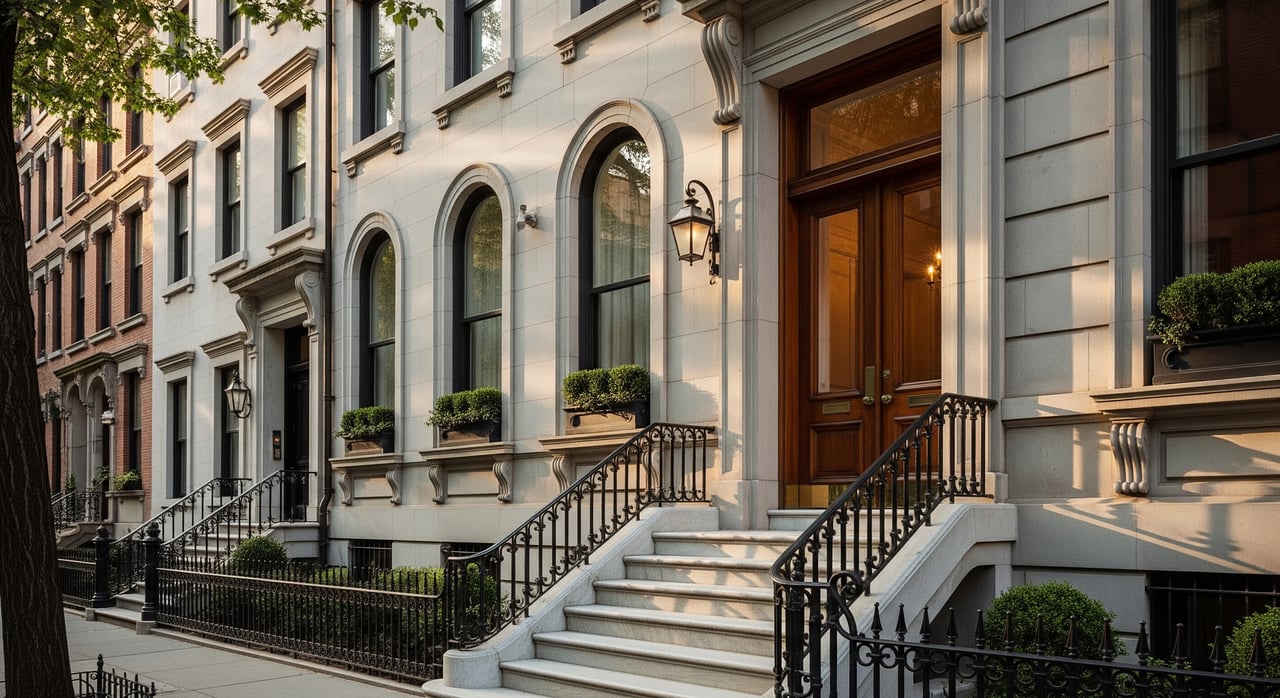
NYC Mansion Tax Explained for Manhattan Homebuyers
November 27, 2025
November 27, 2025
Buying in Manhattan and heard about the “mansion tax”? You are not alone. Closing math in New York can feel opaque, especially once your purchase price crosses seven figures. In this guide, you will learn exactly what the mansion tax is, when it applies, how it fits alongside other NYC taxes and fees, and how to plan your cash to close with confidence. Let’s dive in.
The mansion tax is a New York State transfer tax that applies to residential purchases when the price is $1,000,000 or more. The baseline rule most Manhattan buyers use is simple: 1.0% of the purchase price once you hit the $1,000,000 threshold.
It applies to residential transfers, including condominiums and many co-op share transfers that meet the threshold and are reported on closing documents. Co-ops are technically a transfer of shares rather than real property, but similar treatment often applies when the price is high enough. You should confirm this for your specific deal with your closing attorney.
The tax is calculated on the full purchase price, not on the amount you finance. You typically pay it at closing as part of your cashier’s check or wire.
The purchaser is generally the party liable for the mansion tax. In practice, you pay it at closing. Parties can negotiate how to allocate certain closing costs in the contract, but the statutory liability usually sits with the buyer.
Timing matters. Plan for the mansion tax as part of your cash to close and make sure funds are available in the format your closing agent requires.
The mansion tax is only one line item in your closing costs. In Manhattan, you should also plan for:
Because many Manhattan homes trade at $1,000,000 or more, buyers often pay the mansion tax plus NYC and state transfer taxes. Together, these can materially increase your total cash due at closing.
To make the mansion tax more concrete, here are quick examples using the standard 1.0% rule on purchases at or above $1,000,000.
Beyond the mansion tax, Manhattan buyers commonly owe NYC RPTT and NYS RETT. For scale, consumer examples often show a combined estimate of these transfer taxes. One illustrative pattern many use is approximately 2.825% of the purchase price when you add a 1.0% mansion tax to representative NYC and state transfer-tax components. This is an example only. Actual combined rates depend on current brackets and rules.
Important: These combined figures are examples to show scale. Your exact closing statement will reflect the current NYC and state transfer-tax brackets, any mortgage recording taxes, and other transaction-specific fees.
Buyers who plan early have smoother closings. Use these steps to stay ahead:
Many Manhattan co-op purchases at $1,000,000 or more will trigger the mansion tax. While you are buying shares in a corporation rather than real property, many high-price share transfers are treated similarly for mansion-tax purposes when reported on the closing documents. Always confirm the building’s transfer requirements and tax treatment with your closing attorney.
The mansion tax is a statutory obligation. You and the seller can negotiate how closing costs are allocated in the contract, but the legal liability typically rests with the purchaser. In competitive markets, sellers are less likely to offer concessions. In slower markets, some sellers may agree to contribute toward closing costs as part of a broader negotiation.
Transfer taxes are not generally deductible as an annual expense. They are part of your closing costs. Portions may affect your cost basis, which can matter for capital gains when you sell. Before you sign a contract for a high-value purchase, speak with your attorney and a tax advisor about how the mansion tax and other transfer taxes will be treated for your situation.
If you want a clear, transaction-specific view of your numbers and strategy in downtown Manhattan, let’s talk. Connect with The Saez + Fromm Team for a private, confidential consultation tailored to your goals.
Stay up to date on the latest real estate trends.
October 15, 2026
October 8, 2026
October 1, 2026

September 24, 2026
September 17, 2026

September 10, 2026

September 3, 2026
August 27, 2026

August 20, 2026
As a top team at Douglas Elliman, SAEZFROMM continues to deliver the greatest value to our buyers, sellers, developers, and investors. Our focus is on one thing above all others: our clients, their needs, and what makes them happy.

SAEZFROMM
M: (212) 203-1798
O: (212) 891-7181
[email protected]
Douglas Elliman Real Estate
140 Franklin St
New York NY 10013