Leave a Message

Thank you for your message. We will be in touch with you shortly.

Owning A Landmark Townhouse In Greenwich Village

March 26, 2026

Greenwich Village townhouses are icons that invite both romance and responsibility. If you are drawn to their charm, you may be asking what landmark status means for daily life, smart upgrades, and long-term value. This guide gives you clear steps, realistic timelines, and practical tools to own and improve a landmarked home without surprises. You will learn how the approvals work, what typically gets approved, how to plan energy upgrades, and which incentives may help. Let’s dive in.

Landmark basics in Greenwich Village

Most Village townhouses sit inside a New York City historic district. That means the Landmarks Preservation Commission (LPC) reviews changes that affect protected features, especially anything visible from a public street. In fewer cases, a building is an individual landmark, and in very rare cases a private home’s interior is designated.

  • LPC regulates preservation approvals. The Department of Buildings (DOB) issues construction permits and enforces building code. You often need both agencies to sign off.
  • To see if a property is landmarked, use the LPC’s designation reports and maps for Greenwich Village. You can search the district boundaries and read the designation report to understand protected features. Start here: LPC designation reports and maps.

Approvals and timelines you can plan for

LPC uses several permit types and review tracks. You apply through LPC’s Portico system. Many routine items are approved by staff. Bigger, more visible changes may go to a public hearing.

  • Start an application in LPC Portico. Portico routes simple scopes to expedited tracks when eligible.
  • Common permits include Permit for Minor Work, Certificate of No Effect, and Certificate of Appropriateness. About 95 percent of permits are staff-issued. Learn about expedited tracks like FasTrack and XCNE here: LPC expedited reviews.
  • For major design changes visible from the street, expect a public hearing and a Certificate of Appropriateness. Read the process here: Certificate of Appropriateness overview.

LPC shares target timelines you can use as a baseline once your application is complete:

  • Permit for Minor Work: about 20 working days
  • Certificate of No Effect: about 30 working days
  • Certificate of Appropriateness: up to 90 working days

These are posted agency targets. Actual duration depends on design scope, completeness, mockups, and community review. See the agency’s guidance in the hearing and application resources.

Planning tip: Simple, non-street-visible repairs can move in a few weeks once your team is ready. Window programs, masonry campaigns, or broader exterior work often run three to six months from design start to permits. Rooftop additions or substantial enlargements can take many months or more. Build in time for design iterations, mockups, DOB plan reviews, and scaffolding logistics.

Important: Do not start work until LPC issues its permit and you have all required DOB permits. LPC and DOB can issue violations, fines, and stop-work orders for unpermitted work. The consequences often cost far more than waiting for approvals. See LPC’s reminders in the hearing and applicant guidance.

What typically gets approved on Village townhouses

Façade and masonry work

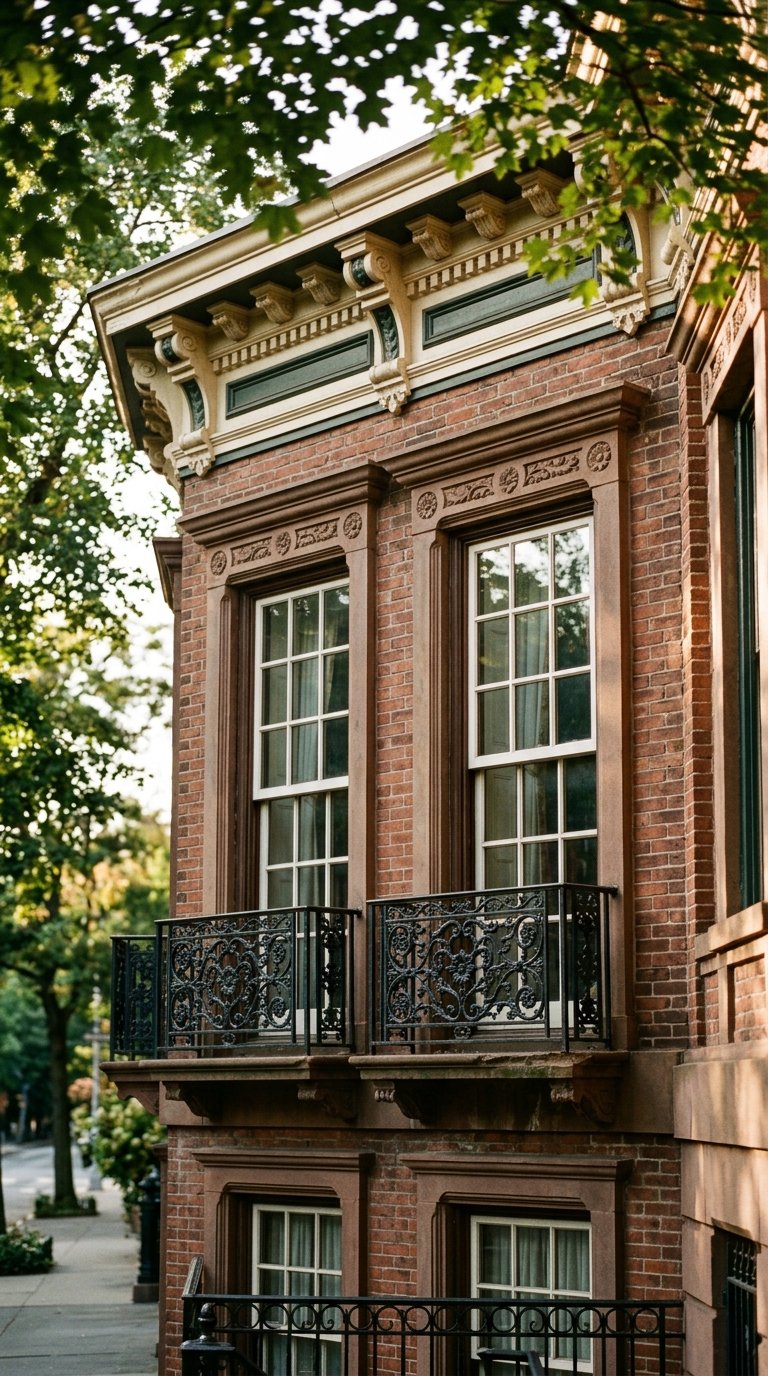
Most exterior work in a historic district needs LPC review. In-kind repairs to stoops, brownstone, brick, and cornices often qualify for staff-level approval when documentation is complete. Replication or profile changes get closer scrutiny. If your building or a neighbor’s building requires a sidewalk shed, DOB will govern those filings and inspections. Learn about façade safety rules here: DOB Façade Inspection & Safety Program.

Windows and doors

Window projects are common. LPC typically favors repair or like-for-like replacement that matches sightlines, profiles, muntins, and finish. With good documentation, staff or expedited review can be possible for in-kind replacements. Mockups may be requested to confirm details. Explore criteria in LPC expedited reviews.

Roofs, rooftop equipment, and additions

  • Sustainable roofing: Local Laws 92 and 94 require sustainable roofing zones for many new or fully replaced roofs. Landmarked homes are not automatically exempt. Coordinate design early so your solar or green roof strategy meets both DOB code and LPC visibility rules. Read about the requirements here: Local Laws 92/94 guidance.
  • Visibility and placement: LPC’s rules define what is not visible or minimally visible. Setbacks, screening, and color help equipment blend with the roof. Technical criteria in RCNY Title 63 often drive staff approvals. See the Title 63 visibility standards.
  • Occupied rooftop space: Roof decks or penthouses are more complex. They need LPC review, and often Commission-level hearings if visible, plus DOB and zoning checks. Plan for a longer runway and thorough design justification. Learn the hearing pathway in the Certificate of Appropriateness overview.

Energy upgrades: solar, heat pumps, insulation

  • Solar panels: Panels can be approved when they are not visible from public ways, or are set back and screened. If you are replacing a roof, LL92/94 may require a sustainable strategy, so align your LPC and DOB filings from the start. See Local Laws 92/94 guidance.
  • Heat pumps and mechanicals: LPC’s rules explain acceptable locations and screening for condensers and wall units. Rear elevations, areaways, and discreet roof placements often succeed. Review the Title 63 mechanical and visibility standards.
  • Emissions caps: Local Law 97 sets emissions limits for large buildings over 25,000 square feet. Most single townhouses are below that threshold, but verify if you own multiple buildings on one lot. Read the policy here: Local Law 97 overview.

Interiors and when LPC applies

LPC regulates interiors only when a space is specifically designated as an Interior Landmark, which is rare for private homes. If your interior is not designated, LPC usually does not review internal layout changes, but DOB permits and code compliance still apply. Confirm status through LPC designation reports and maps.

Budget, incentives, and value

Tax incentives an owner may use

  • New York State Historic Homeownership Rehabilitation Tax Credit: This program offers a 20 percent credit on qualified rehabilitation expenses, capped at 25,000 dollars per taxpayer per year, with a 5,000 dollar minimum in qualified costs. Eligibility depends on listing status and geography rules. Start with the official overview: NYS Historic Homeownership Rehabilitation Credit.
  • Federal 20 percent Historic Rehabilitation Tax Credit: This applies to certified historic, income-producing properties. Owner-occupied private homes do not qualify.

Grants and local funding sometimes exist through preservation nonprofits or state agencies. These are competitive and project specific, so check current cycles with state preservation offices.

Cost planning and materials

Historic-grade materials and custom replication tend to cost more than off-the-shelf options. Expect premiums for carved stone, true divided-lite wood windows, specialized masonry, and for mockups and scaffolding. LPC often asks for in-kind repair or high-quality replacement on character-defining elements. Review the approval lens in the Certificate of Appropriateness overview.

Value implications of historic districts

Studies of historic districts often find a neutral to positive price effect, with premiums varying by city and time period. Results are context dependent and tied to demand for historic character and regulated streetscapes. Treat any premium as market specific and verify with current local data.

Due diligence checklist before you buy or renovate

Use this quick list to set your project up for success:

  • Confirm landmark status and retrieve the LPC designation report, prior approvals, and any violations. Start with LPC designation reports and maps.
  • Check DOB records for open permits, violations, and whether façade safety rules apply. Review the DOB Façade Inspection & Safety Program.
  • Verify whether any interior spaces are designated as Interior Landmarks.
  • Assemble a preservation-experienced team early. Include an architect with LPC experience, a structural engineer, a contractor familiar with historic districts, and an expediter.
  • Plan a master strategy for rooftop mechanicals, solar, and insulation to streamline LPC review and avoid piecemeal filings.
  • Budget time for mockups, samples, and community board coordination if your project is likely to go to a public hearing.
  • Explore eligibility for the NYS Historic Homeownership Rehabilitation Credit early, and confirm requirements with the state before counting on the funds.

A smart project workflow

  1. Pre-design and records. Gather designation reports, LPC permit history, and DOB records. Photograph all elevations and interiors to document existing conditions.

  2. Concept development. Engage your architect to test design options that limit street visibility and preserve character-defining features. For complex scopes, ask about an optional pre-application conversation with LPC staff.

  3. Application strategy. Decide which components qualify for staff-level review versus a Certificate of Appropriateness. Prepare drawings, material schedules, mockups, and a clear rationale.

  4. Submit through Portico. File in LPC Portico. If eligible, Portico will route items to expedited tracks.

  5. Coordinate DOB filings. After LPC approval, complete DOB plan exam and obtain permits. Some permits require LPC status update letters before DOB accepts filings.

  6. Execute and monitor. Sequence scaffolding, sidewalk sheds, and inspections. Keep approvals on site and follow LPC and DOB sign-off procedures to close permits cleanly.

Avoid costly pitfalls

  • Do not start work before receiving LPC and DOB permits. Violations, fines, and stop-work orders are common outcomes, and corrective work can be expensive. See LPC’s reminders in the hearing and applicant guidance.
  • Respect visibility rules. A few inches of rooftop visibility can trigger redesigns. Use mockups and sightline studies early.
  • Match materials carefully. In-kind repair and high-quality replication move faster than substitutions that change profiles or finishes.
  • Plan for access. Scaffolding and sheds add time and cost. Neighbors’ sheds can affect your access and schedule.

Positioning your townhouse for future resale

Keep a clean paper trail. Save all LPC approvals, DOB permits, inspection logs, and final sign-offs. Buyers, lenders, and insurers often review these records. A well-executed restoration with full documentation can protect value and reduce friction at contract time.

If you are evaluating improvements with an eye to sale, focus on authentic restoration where visible and discreet upgrades where not. Pair energy efficiency with careful detailing. The result is a home that lives better today and reads as timeless in the market.

When you are ready to discuss strategy, the SAEZFROMM Team can help you weigh renovation scope, timing, and resale positioning, and connect you with trusted preservation professionals.

FAQs

What does landmark status mean for a Greenwich Village townhouse?

  • LPC reviews exterior work visible from public streets and protects defining features. DOB issues building permits. Many like-for-like repairs are staff-approved once documented.

What permits do I need to renovate a landmarked townhouse in NYC?

  • You may need an LPC Permit for Minor Work, Certificate of No Effect, or a Certificate of Appropriateness, plus DOB construction permits. Start via LPC Portico.

How long does LPC approval usually take for townhouse work?

  • LPC targets about 20 working days for Minor Work, 30 for a Certificate of No Effect, and up to 90 for a Certificate of Appropriateness, once your application is complete.

Can I add solar panels or heat pumps on a landmarked townhouse?

  • Yes, when designed to meet LPC visibility rules and DOB codes. If you replace a roof, Local Laws 92/94 may require a sustainable roofing strategy.

Are there tax credits for restoring my owner-occupied Greenwich Village townhouse?

  • The NYS Historic Homeownership Rehabilitation Credit offers a 20 percent credit on qualified costs, capped at 25,000 dollars per taxpayer per year, subject to eligibility.

What is Local Law 11 and does it affect my Village townhouse?

  • The DOB Façade Inspection & Safety Program applies to buildings over six stories. Even if your townhouse is below the threshold, nearby sheds can affect access and timelines.

Will landmark designation hurt resale value in Greenwich Village?

  • Research often shows neutral to positive effects in historic districts, though results vary by market and scope. Strong documentation and quality work support value.

Work With Us

As a top team at Douglas Elliman, SAEZFROMM continues to deliver the greatest value to our buyers, sellers, developers, and investors. Our focus is on one thing above all others: our clients, their needs, and what makes them happy.