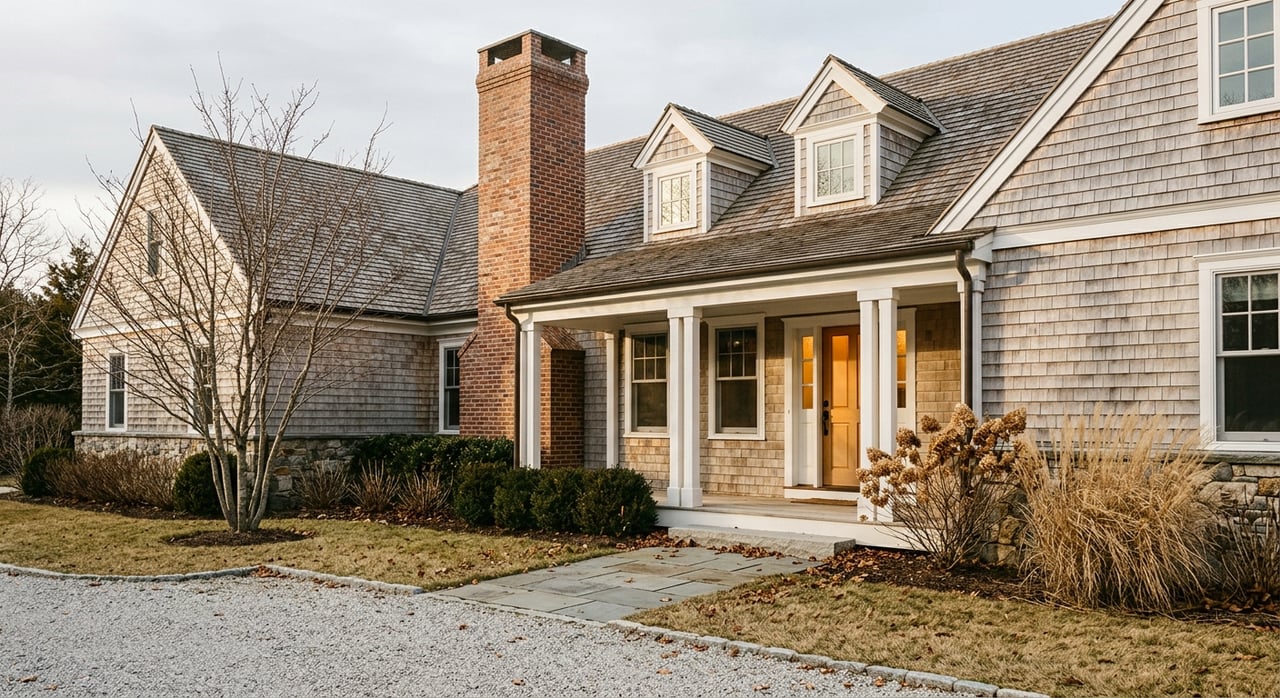
Hamptons Off Season Living Beyond the Summer Rush
April 9, 2026
April 9, 2026
If your image of the Hamptons begins and ends with summer traffic, full restaurants, and packed beaches, the quiet season may come as a surprise. For many buyers, the real question is not what the Hamptons feels like in August, but what it feels like in January, February, and early spring when everyday life takes over. If you are considering a year-round home in Suffolk County’s East End, understanding the off-season rhythm can help you picture daily life more clearly. Let’s dive in.
The biggest shift in the Hamptons after summer is not that everything disappears. It is that the pace changes. Late fall through early spring tends to feel less like a resort cycle and more like a collection of functioning residential communities.
That impression is supported by population data. According to U.S. Census QuickFacts for East Hampton Town, East Hampton had 29,090 residents in 2024, while Southampton Town had 70,646 residents. Combined with strong owner-occupancy and same-house figures, that points to a meaningful year-round population base rather than a place that fully empties after Labor Day.
For you as a buyer, that matters. It means the off-season is not simply a quieter version of vacation. It is a time when local routines become more visible, and you can better judge whether a particular hamlet fits the way you want to live.
In the quieter months, the Hamptons can feel more practical and more grounded. You notice what supports day-to-day life, from commuting options to schools, healthcare, and community gathering spaces.
Transportation is a good example. The Long Island Rail Road runs year-round, with schedules that change by destination and time of day, and summer service is added on the Montauk Branch. The South Fork Commuter Connection also links Speonk and Hampton Bays with Southampton, Bridgehampton, Amagansett, and Montauk by train and shuttle bus, reinforcing the idea that this is a lived-in region, not only a seasonal destination.
That seasonal contrast can be useful if you split time between the East End and the city. In the off-season, the travel rhythm often reads more like ordinary commuting and less like a peak-weekend rush.
If you are weighing full-time living, one of the most important realities is that school life in the Hamptons is not seasonal. Public-school districts continue operating on a normal academic schedule, which helps anchor year-round life across the East End.
For example, East Hampton UFSD, Southampton UFSD, Sag Harbor UFSD, and Springs School all maintain active district websites with current information and updates. That does not tell you which district is the right fit for your household, but it does confirm that the region functions as a real home base for residents through all seasons.
For buyers, this is often where perspective changes. In summer, you may evaluate an area through leisure. In winter, you start to evaluate it through logistics, routine, and how seamlessly daily life can work.
Another part of off-season confidence is healthcare. Many coastal markets feel limited once the busiest months pass, but the Hamptons benefits from year-round hospital access.
Stony Brook Southampton Hospital’s emergency medicine services include fully staffed 24/7 emergency departments in Southampton and East Hampton. The East Hampton emergency department serves residents and visitors from Amagansett, Montauk, Sag Harbor, and Springs.
That kind of infrastructure changes how a place feels in the off-season. It supports the case for the Hamptons as a practical year-round setting, not just a beautiful seasonal escape.
Some of the best clues about year-round life are not flashy. They are the places people return to consistently, week after week.
Libraries play that role across the Hamptons. East Hampton Library, John Jermain Memorial Library, and Montauk Library all maintain regular hours and ongoing programming. Their calendars include talks, story times, book discussions, exhibits, and other public events that help create a steady sense of community.
In the off-season, these spaces often feel less like quiet amenities and more like everyday civic centers. If you are trying to understand the social texture of a place beyond the summer crowd, this is where much of that texture shows up.
One of the most common misconceptions about winter in the Hamptons is that dining and hospitality shut down entirely. In reality, the scene becomes more compact and more local.
Montauk is one of the clearest examples. The Montauk Chamber’s winter guide identifies restaurants and bars that stay open, along with year-round basics such as Montauk IGA, Naturally Good Foods & Cafe, Gurney’s Montauk Resort & Seawater Spa, and Montauk Manor. The chamber also notes that hours vary, so it is wise to confirm plans before heading out.
That smaller scale is part of the appeal for many buyers. The off-season dining experience can feel more relaxed, more familiar, and less centered on peak-season demand.
If your lifestyle includes art, performance, and public programming, the Hamptons still offers meaningful options beyond summer. The calendar may be lighter, but it does not disappear.
Sag Harbor stands out for its cultural consistency. The Sag Harbor Partnership describes Bay Street Theater as a year-round professional theater and community cultural center, and it notes that the Sag Harbor Whaling Museum is open daily. Combined with the library and village setting, that gives Sag Harbor a particularly compact, active off-season feel.
East Hampton and Southampton also maintain strong cultural touchpoints. Guild Hall lists regular gallery, box office, and coffee bar hours, while the Parrish Art Museum is open Thursday through Monday with museum grounds open daily. Southampton Arts Center also maintains weekend gallery hours and a live events calendar.
For buyers who value year-round enrichment, these institutions help define the Hamptons as more than a summer backdrop. They create continuity, which is often what makes a second-home market feel genuinely livable in every season.
The off-season is also when local differences become easier to read. Summer can blur identities because demand rises everywhere at once. Winter makes each place feel more distinct.
Montauk tends to show some of the clearest year-round hospitality and grocery options. Sag Harbor offers a village-centered cultural rhythm with walkable civic anchors. East Hampton combines schools, arts, and library life, while Southampton benefits from active schools, rail access, and hospital proximity.
This is where a more thoughtful home search matters. The right fit often depends less on a summer image and more on your off-season habits, including how you commute, where you like to spend a weekday afternoon, and what kind of community infrastructure matters most to you.
The Hamptons can work well year-round, but winter convenience is not always identical to summer convenience. Schedules and availability can change by season, so practical due diligence matters.
Before you buy, it helps to verify:
Those details may sound small, but they often shape your lived experience more than a peak-season impression does. A home that feels perfect in July should also make sense on an ordinary Tuesday in February.
If you are seriously considering a Hamptons purchase, visiting in the off-season can be one of the smartest steps you take. It gives you a chance to see the area without the distortion of summer intensity.
You can test the pace, check the commute, visit the places that stay active, and decide whether the setting supports the lifestyle you want all year. In many cases, the quieter months reveal the strongest case for buying because they show you what day-to-day ownership would actually feel like.
If you are considering a Hamptons home and want a more strategic, lifestyle-driven perspective on how to evaluate year-round fit, the SAEZFROMM Team can help you think through the details with care and discretion.
Stay up to date on the latest real estate trends.
October 15, 2026
October 8, 2026
October 1, 2026
September 24, 2026
September 17, 2026
September 10, 2026
September 3, 2026
August 27, 2026

August 20, 2026
As a top team at Douglas Elliman, SAEZFROMM continues to deliver the greatest value to our buyers, sellers, developers, and investors. Our focus is on one thing above all others: our clients, their needs, and what makes them happy.
SAEZFROMM
M: (212) 203-1798
O: (212) 891-7181
[email protected]
Douglas Elliman Real Estate
140 Franklin St
New York NY 10013